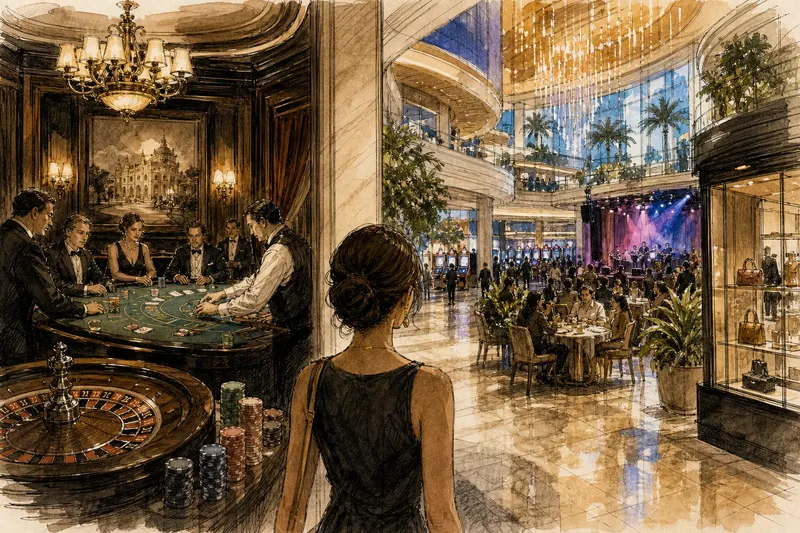
Table Games and Machine Games: Two Different Casino Formats
Table games and machine games differ in pace, social contact, and control. Learn how each format shapes the experience before choosing what suits you.
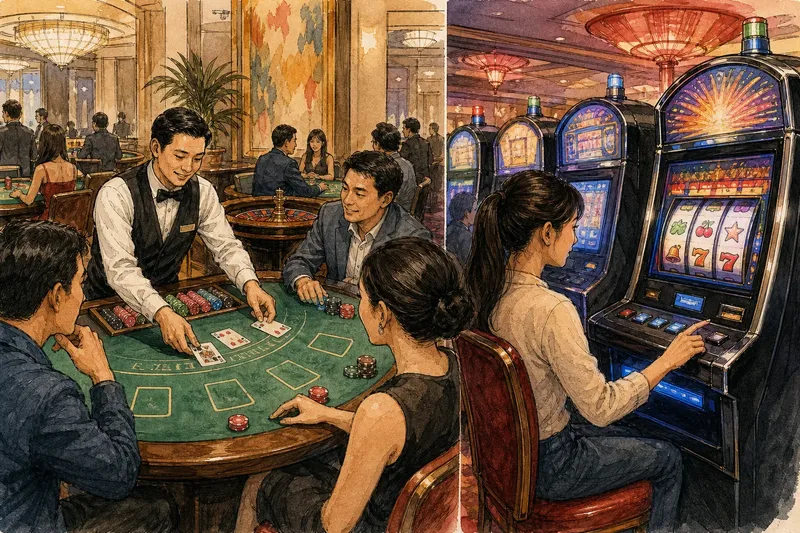
Table games and machine games create different kinds of casino encounters: one gathers people around a shared surface, while the other usually places a player at an individual console. If you are comparing table games and machine games, the difference is not simply cards versus screens. It lies in who sets the pace, where attention goes, and how much interaction the format invites.
That distinction can be seen in a blackjack table where a dealer addresses several players, or at a slot machine where one person makes decisions through a screen and controls. Neither arrangement tells you what a person will enjoy, and neither is inherently more social or more engaging in every setting. The format shapes the conditions; the people and the venue shape what happens within them.
What makes a game a table game?
A table game is organized around a shared playing area and a human dealer or croupier. Blackjack, baccarat, roulette, and craps are familiar examples, though the rules and customs differ from game to game. Players generally take part from assigned places around the table, while the dealer manages the round, handles equipment, and applies the game’s procedures.
The table provides a common point of attention. In roulette, players watch the wheel and ball; at blackjack, they follow cards and the dealer’s actions. A player may be making an individual decision, but that decision takes place in view of other people and within a round that continues at a pace set partly by the dealer and the group.
Table games also use a visible material vocabulary: felt, chips, cards, dice, wheels, and marked betting areas. These objects make the rules legible in physical space. They can also make the play feel formal, because turns and actions are performed in an established sequence rather than through private controls.
What makes a game a machine game?
Machine games place the main interface at an individual terminal or cabinet. Slot machines are the most recognizable example; electronic roulette terminals and other digital game stations also use this arrangement. A screen, buttons, touch controls, or a combination of them presents the options and records the player’s input.
The player does not usually need to wait for a dealer to begin a round. The machine presents its own sequence, and the player chooses when to make an input or move on, subject to the game’s design. This can make the experience feel more private and self-directed, even when the machines are arranged in a busy room.
Machine games vary in appearance and interaction. A cabinet may use animation, sound, physical buttons, or a touchscreen; another terminal may reproduce a table game through a digital interface. The shared feature is not a particular look but the machine’s role as the primary operator of the game’s sequence.
How do the two formats set the pace?
At a table, the pace is negotiated through the dealer’s routine and the players’ actions. A round cannot proceed until the relevant decisions and procedures are complete. A confident group may move briskly, while questions, pauses, or a full table can make the rhythm slower and more conversational.
A machine makes the timing more immediate. The player can usually initiate a new round without waiting for other players, though the game’s animations and built-in sequence still shape the interval between decisions. That control over when to continue is a meaningful difference, not a promise that machine play will feel calm or that table play will feel slow.
Imagine a visitor arriving at a casino with a short window before meeting friends. At a table already in the middle of a round, they might wait for an appropriate opening or watch before joining; at an unoccupied machine, they could begin using the on-screen prompts. The observable difference is how each format handles entry: one has a shared round to join, while the other is organized around an individual session.
Where does interaction happen?
Table interaction is built into the arrangement, but it does not require constant conversation. Players may exchange brief comments, ask the dealer about procedure, or simply watch the same action in silence. The dealer is both a game participant in the procedural sense and a point of contact for questions, though the dealer is not there to provide personal instruction or social companionship.
Machine play tends to keep interaction between the player and the interface. A person can focus on the display without coordinating decisions with a group, which some visitors may find comfortable. Nearby players and staff remain part of the room, but their presence does not usually determine the next move in the way a table’s shared round does.
These are tendencies, not strict boundaries. Friends can gather around a machine, and table players may remain quiet. The useful distinction is whether social contact is part of the game’s operating structure or something people add around it.
How do players make decisions in each format?
At a table, decisions are made through visible actions that fit the rules and conventions of the game. A blackjack player may signal a choice with a gesture or words; a roulette player places chips in designated areas before the relevant point in the round. The dealer’s presence and the shared surface help define when an action is possible and how it is understood.
On a machine, the interface translates choices into button presses or screen selections. Prompts may guide the player through the available options, and the display keeps the game state in view. This can reduce the need to learn table etiquette, but the interface still has rules and terms that a player may want to read before starting.
The contrast is not between skill and no skill. Different games ask for different kinds of attention, and a machine can present choices while a table game can involve chance and routine. What changes most clearly is the channel through which a decision is made: a public action in a shared procedure or a direct input to a device.
Which questions clarify the difference?
Do table games always involve other players?
Not necessarily; a table can have few players or, depending on the game and venue, a person may play with the dealer as the only other active participant. Even then, the shared table and dealer-led sequence remain central to the format.
Are machine games always solitary?
No. People may play side by side, talk, or watch one another, but each terminal usually runs an individual sequence. The social setting can be lively while the game mechanics remain separate.
Can a machine reproduce a table game?
Yes, electronic terminals can present games such as roulette or blackjack in digital form. They may resemble a table game in rules or imagery, while differing in who or what operates the round and how players interact.
Does either format have a single standard pace?
No. Table pace depends on the game, dealer, and group, while machine pace depends on its interface and the player’s choices. The format suggests a rhythm, but the specific game and setting matter.
What should a visitor notice in Bắc Ninh or elsewhere in Vietnam?
Casino culture is shaped by its setting as much as by the equipment. A visitor may notice how a venue presents table play as a shared, hosted activity and machine play as a more individually managed one. Room layout, signs, staff routines, and the languages used for instructions all influence how accessible each format feels.
In Bắc Ninh and other parts of Vietnam, the local context matters: visitors should not assume that every venue offers the same games, operates under the same rules, or welcomes the same kinds of participation. The game’s display and the venue’s posted information are better guides than assumptions based on an image of casinos elsewhere. Where rules, eligibility, or venue policies are involved, follow the applicable local requirements and the venue’s instructions.
Language can also affect interaction. At a table, a player may need to understand a dealer’s announcement or a brief procedural explanation; at a machine, prompts and help screens carry more of that burden. Clear signage and staff assistance can bridge the gap, but they do not make the two formats socially identical.
What does the format change—and what does it not?
The format changes the social geometry of play: a table distributes attention across people and a shared surface, while a machine directs it toward one player’s interface. It also changes how a round begins, how decisions are communicated, and how much a player’s timing depends on others.
It does not, by itself, settle whether an experience is entertaining, comfortable, or appropriate for a particular person. Those judgments depend on preferences, the specific game, the venue, and the circumstances of the visit. Understanding table games and machine games is most useful as a way to read the interaction on offer, not as a reason to rank one format above the other.
Before joining either, take a moment to look at how a round starts and what the interface expects from you. That small pause can reveal whether you are entering a shared procedure or beginning an individual one—and help you choose with a clearer sense of the experience you are stepping into.