How the Public Image of the Casino Changed
The changing public image of the casino traces how films, architecture, and resort culture recast gaming rooms as parts of larger entertainment complexes.
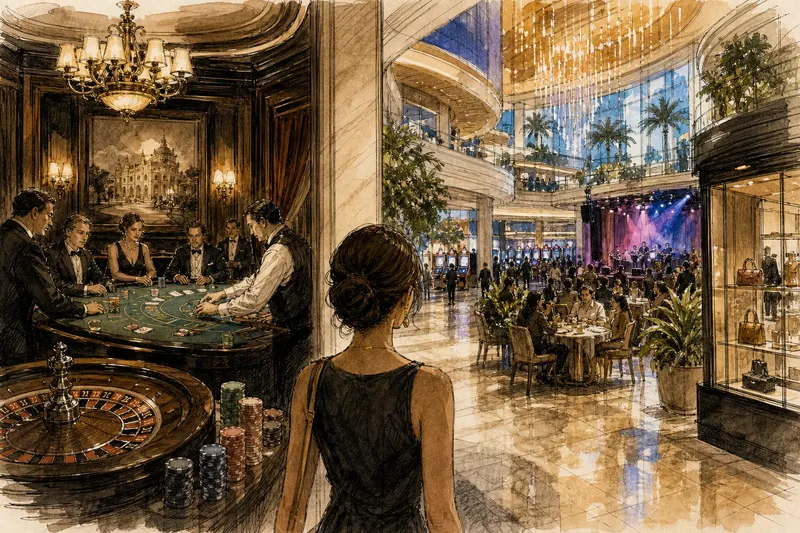
The changing public image of the casino is visible in a contrast between a hushed gaming room and a resort lobby that folds gambling into dining, performances, and shopping. Popular culture helped make that shift legible, turning the casino from a place associated chiefly with games of chance into a setting for leisure, spectacle, and social life.
How did the casino first appear in popular culture?
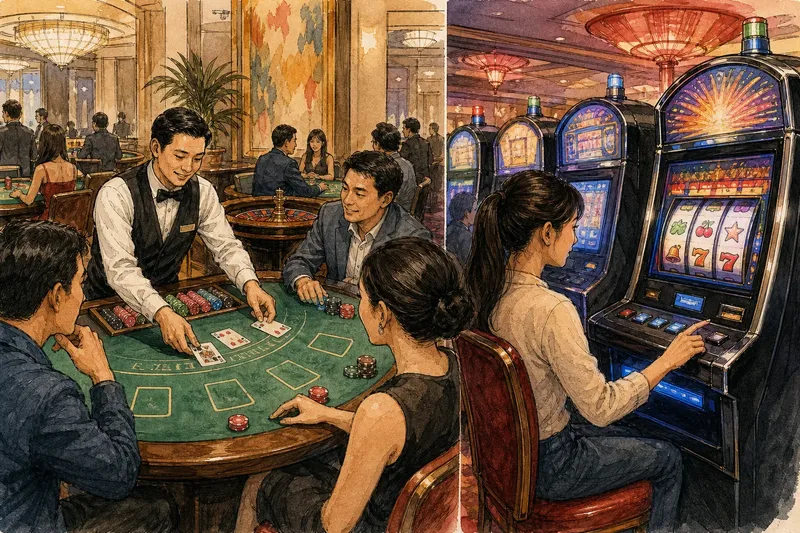
Early popular depictions often treated the casino as a formal room with clear social codes. Polished tables, attentive staff, evening dress, and measured conversation made gambling seem like a ritual conducted in a controlled setting rather than a casual pastime.
That image reflected a longstanding association between gaming and elite sociability in parts of Europe. In fiction and film, a casino could signal wealth, risk, and manners at once: the table was a stage, and a player’s composure mattered as much as the wager.
The setting also offered storytellers a compact way to create tension. A hand of cards or a turn at roulette could bring strangers together, expose a character’s confidence, or make a private motive visible without requiring a long explanation.
Why did film make casinos seem glamorous and dangerous?
Film sharpened the casino’s double image. Elegant interiors and evening clothes suggested exclusivity, while close views of cards, chips, and watchful faces made the same room feel charged with risk.
Crime stories and thrillers often used the casino as a meeting place for characters who lived by uncertainty. The room’s ordered appearance could sit beside deception, debt, or a sudden change of fortune, giving writers a visual contrast that audiences understood quickly.
This portrayal was memorable, but selective. It put the dramatic player at the center and left out much of the ordinary social infrastructure: the staff, the dining spaces, the varied reasons people might visit, and the work required to operate a large venue.
When did the casino become part of a larger entertainment complex?
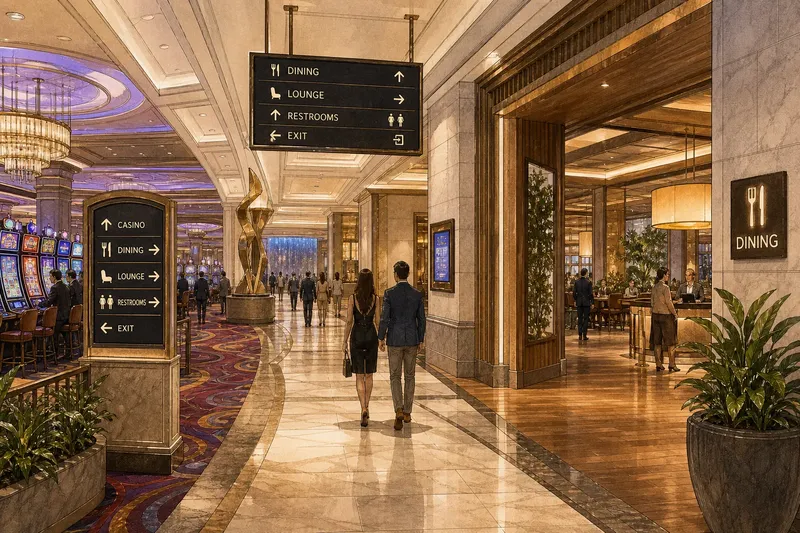
As resort development expanded, casinos increasingly appeared as one feature within a broader destination. Hotels, restaurants, showrooms, convention spaces, and retail areas changed the public picture from a single gaming room to a complex designed for different kinds of visitors.
Popular imagery followed. Promotional photography and screen stories could present a casino beside a hotel entrance or a performance venue, suggesting that a visit might include more than gambling. The casino remained distinctive, but it was now framed as a component of an evening or a trip.
Imagine a fictional visitor arriving at a resort for a concert and passing the gaming floor on the way to dinner. The visible result is a different sense of the venue: gambling is present, but it shares the building with entertainment that does not depend on placing a wager.
What does contemporary casino design communicate?
Contemporary casino settings often communicate abundance through layered lighting, open sightlines, dramatic entrances, and a mix of textures. The design can make movement between gaming, food, and entertainment feel continuous, even when each area has its own atmosphere.
That visual language differs from the imagined formal room. Instead of emphasizing quiet etiquette, it may foreground activity and choice. A lounge, restaurant, or live show can soften the impression that the venue exists only for play, while the scale of the architecture still signals a purpose-built destination.
These design choices are not culturally neutral. A resort’s public image depends on local expectations about leisure, hospitality, and gambling, as well as on the way its operators present the space. In Vietnam, including Bắc Ninh, discussion of casino culture should distinguish between the global imagery circulated by film and tourism and the particular legal and social context of a local place.
Why does the casino still carry conflicting meanings?
The casino can suggest both welcome and caution because its entertainment value and its financial risks coexist. A visitor may encounter music, food, and sociability, while the institution remains organized around games involving money and chance.
Popular culture tends to heighten one side at a time. A glamorous scene emphasizes style and access; a crime narrative emphasizes danger; a resort advertisement emphasizes convenience and variety. None is a full account of how people experience a venue or how gambling affects households and communities.
That tension matters especially in places where gambling is discussed alongside tourism, employment, regulation, and family life. The public image does not simply describe the casino; it can influence which aspects of the institution seem ordinary and which remain contentious.
What questions do readers ask about casino imagery?
Did casinos always look like luxury resorts?
No. The resort image grew more prominent as casinos became integrated with hotels and other entertainment facilities. Earlier depictions often centered on the gaming room itself and its social rules.
Why do films so often show casinos as places of crime?
A casino concentrates money, secrecy, and risk in a visually recognizable setting, which makes it useful for suspense. That storytelling convenience should not be mistaken for a complete picture of casino life.
Are casinos now presented as entertainment venues rather than gambling venues?
Many are presented as both, with dining, performances, lodging, or retail alongside gaming. The balance differs by place and venue, and the presence of other attractions does not erase the gambling function.
How should casino imagery be understood in Vietnam?
It helps to separate international film and resort conventions from Vietnam’s own legal, cultural, and social circumstances. Local rules and the setting’s actual role in community life matter more than imported images alone.
What does the changing public image leave us with?
The changing public image of the casino is less a clean progression from formality to spectacle than an accumulation of meanings. The polished gaming room remains part of the cultural memory, even as resorts, screens, and tourism have widened the picture.
For a reader, the useful distinction is between a casino’s presentation and its function. A venue may invite people in with hospitality and entertainment, while its gaming remains a separate activity with consequences that deserve clear-eyed attention.